
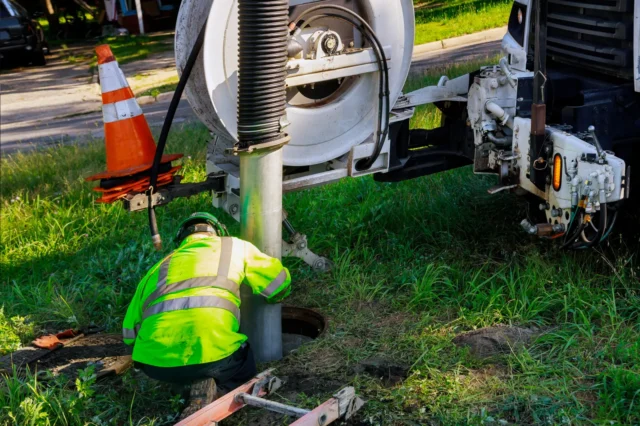
Yes, a damaged septic outlet baffle can allow solid waste and floating materials to leave the tank and enter downstream components, increasing the risk of drainfield clogging. A professional should inspect the baffle, any installed effluent filter, and surrounding tank components. Replacing the damaged baffle may prevent further solids from escaping, but it cannot automatically reverse existing drainfield damage.
Can a Damaged Septic Outlet Baffle Cause Drainfield Problems?
A septic tank depends on several internal components to separate waste before wastewater reaches the drainfield. One of the most important is the outlet baffle, which helps prevent accumulated solids and floating materials from leaving the tank.
When this component becomes cracked, deteriorated, displaced, or completely detached, the tank may no longer separate outgoing wastewater as intended.
Instead of allowing primarily liquid effluent to enter the outlet pipe, the damaged connection may allow grease, scum, and suspended solids to travel downstream.
Over time, these materials can contribute to blocked pipes and reduced drainage performance.
However, finding a damaged septic outlet baffle does not automatically mean the drainfield has already failed.
The extent of the problem depends on how long the baffle has been compromised, the amount of solids escaping, and the condition of the downstream system.
For homeowners in Mt. Pleasant, NC, HoneyBee Septic Tank Service provides septic tank repair services to help address damaged components and related system concerns.
A professional inspection can determine whether the problem is limited to the tank outlet or requires further evaluation of downstream components.
How Does the Outlet Baffle Protect Downstream Components?
The outlet baffle helps control which portion of the wastewater leaves the septic tank.
Inside a conventional tank, wastewater separates into three general layers.
Heavier solids settle at the bottom and form sludge. Grease, oils, and other floating materials rise to the surface and create a scum layer.
Between them is a liquid layer commonly called effluent.
The outlet baffle allows wastewater to leave from this intermediate liquid zone while limiting the movement of floating scum and accumulated solids.
Why the baffle extends below the liquid surface
A properly designed outlet baffle or sanitary tee extends beneath the normal liquid surface.
This arrangement prevents floating materials from moving directly into the outlet pipe.
It also helps the tank retain waste that should remain inside until professional pumping removes it.
Without an effective outlet baffle, floating materials and suspended particles have a greater opportunity to leave the tank.
What can damage an outlet baffle?
Outlet baffles may deteriorate for several reasons, including:
- Corrosion of older metal components.
- Deterioration of concrete baffles.
- Cracking or damage around the outlet connection.
- Movement or separation of internal components.
- Damage during improper servicing.
- Aging materials that lose structural integrity.
Some older concrete tanks have baffles formed as part of the tank structure.
Over time, these components may deteriorate or break away.
Other systems use sanitary tees or different outlet assemblies that can also become damaged.
Why the outlet connection matters
The outlet baffle is part of a larger wastewater discharge arrangement.
Even when the baffle appears intact, problems with its positioning, outlet pipe connection, or surrounding tank wall may affect performance.
A professional should evaluate the complete outlet assembly rather than assume the visible baffle is the only component that matters.
The baffle’s main purpose is to help keep solids inside the tank so the drainfield receives wastewater that has undergone the intended separation process.
What Happens When Solids Escape the Tank?
The drainfield is designed to receive partially treated liquid effluent, not large amounts of grease, scum, or accumulated solid waste.
When solids escape through a defective outlet, they may interfere with wastewater distribution and soil absorption.
Solids can accumulate in downstream pipes
After leaving the septic tank, wastewater travels through pipes toward the drainfield.
In some systems, it also passes through a distribution box or other components.
Escaped solids can settle inside these connections and contribute to restrictions.
The result may be uneven wastewater distribution or reduced flow through affected sections.
However, not every downstream blockage originates from a damaged baffle. Tree roots, damaged piping, and other conditions can produce similar symptoms.
Drainfield openings may become restricted
A conventional drainfield uses perforated pipes or other approved distribution components to release effluent into the surrounding soil.
When excessive solids reach these areas, they can accumulate around openings and within the receiving materials.
This may reduce the system’s ability to distribute wastewater as intended.
The extent of damage depends on the amount of material entering and the existing drainfield condition.
Excess solids can affect soil absorption
The soil beneath a drainfield develops a biological layer, commonly called a biomat, as wastewater is treated.
A properly functioning biomat is part of the treatment process.
However, excessive organic loading and solids accumulation can contribute to a thicker, more restrictive layer.
This may reduce the rate at which wastewater enters the soil.
As drainage becomes restricted, wastewater can accumulate in the trenches and eventually contribute to backups or surfacing sewage.
Why damage may not appear immediately
A broken baffle does not necessarily cause noticeable symptoms right away.
Solids may accumulate gradually before flow becomes restricted.
Some homeowners discover the damaged component during routine pumping, while others first notice slow drains or wastewater problems.
Because these symptoms can have multiple causes, the drainfield’s condition must be evaluated separately.
How Are Baffles and Effluent Filters Evaluated?
A professional septic inspection should establish whether the outlet baffle is present, correctly positioned, and functioning as intended.
If the system includes an effluent filter, its condition should also be evaluated.
What does a septic outlet baffle inspection involve?
The contractor examines the accessible outlet assembly for visible deterioration or displacement.
Important findings may include:
- Cracked or broken baffle materials.
- Missing or detached components.
- Corrosion or deterioration.
- Improper outlet positioning.
- Damaged pipe connections.
- Obstructions affecting wastewater movement.
The contractor may also examine liquid levels, sludge accumulation, and other tank conditions that could influence the outlet’s performance.
The assessment should determine whether the component can be repaired or requires replacement.
Is an effluent filter the same as a baffle?
No. A septic effluent filter and an outlet baffle serve related but different purposes.
The outlet baffle helps prevent floating scum and other accumulated materials from entering the outlet.
An effluent filter provides additional screening to capture smaller particles before wastewater continues downstream.
Filters are commonly installed within an outlet assembly, but not every septic system has one.
Older tanks and different system designs may have different outlet arrangements.
A contractor should identify what is installed rather than assume that every tank contains a removable filter.
Can a damaged baffle affect the filter?
Yes. If excessive solids reach an installed effluent filter, the filter may become restricted more quickly.
A clogged filter can reduce wastewater flow out of the tank.
This may cause the liquid level to rise and contribute to household drainage problems.
However, filter clogging does not necessarily mean the baffle is damaged.
The filter may also become restricted through normal accumulated waste or other system conditions.
Can pumping reveal a broken outlet baffle?
Yes. Septic pumping can provide an opportunity to inspect internal tank components that may otherwise be difficult to assess.
When liquid and accumulated waste are removed, the contractor may be able to identify broken, missing, or deteriorated baffles.
The inspection should also consider the tank’s structural condition and any evidence of abnormal wastewater movement.
Pumping removes accumulated waste, but it does not repair a damaged outlet baffle.
If a defect is discovered, the contractor should explain the required corrective work.
Because septic tanks contain hazardous gases and other serious risks, homeowners should never enter a tank or attempt to open it for inspection.
When Is a Component Repair Enough?
A localized septic outlet baffle repair may be sufficient when the problem is limited to the outlet assembly and the remaining system is functioning properly.
However, the contractor must first establish the condition of the tank and connected components.
When localized repair may be appropriate
A component repair may be considered when:
- The outlet baffle is damaged or missing.
- The surrounding tank structure remains suitable.
- The outlet pipe is in serviceable condition.
- A compatible replacement method is available.
- There is no evidence of significant downstream deterioration.
Depending on the original tank design, the contractor may recommend replacing a deteriorated baffle with an appropriate outlet tee or another approved component.
The repair should follow applicable system requirements and account for the existing tank construction.
What if the tank is also damaged?
A broken outlet baffle may be associated with deterioration around the tank wall or outlet connection.
If the surrounding concrete, piping, or structural materials are compromised, replacing the baffle alone may not provide a suitable repair.
Additional tank repairs or replacement may need consideration.
Does installing an effluent filter solve the problem?
An effluent filter can provide additional protection against solids entering downstream components.
However, it is not a substitute for correcting a defective outlet assembly or repairing damaged tank materials.
The contractor must determine whether a filter is appropriate for the system and how it will be maintained.
Any installed filter also requires periodic inspection and cleaning.
Why repair does not guarantee drainfield recovery
Correcting the outlet baffle helps prevent additional solids from escaping.
However, materials that have already accumulated in downstream piping or drainfield components do not automatically disappear.
A separate assessment may be necessary to determine whether existing restrictions require attention.
When Does the Drainfield Also Need Assessment?
A professional should consider evaluating the drainfield when a damaged baffle is accompanied by recurring drainage problems, unusually high tank liquid levels, or evidence of downstream restrictions.
The goal is to determine whether escaped solids have affected the system beyond the tank.
Signs that downstream components may be affected
Potential warning signs include:
- Slow drainage at several household fixtures.
- Sewage backing up into toilets or showers.
- Gurgling sounds from plumbing fixtures.
- Wastewater pooling near the drainfield.
- Persistent sewage odors outdoors.
- Unusually wet ground around the drainage area.
These symptoms do not prove that a broken baffle caused the problem.
They indicate that further investigation may be necessary.
What should a downstream assessment establish?
The contractor should determine whether wastewater can move through the outlet piping and drainfield as intended.
The assessment may involve examining accessible downstream components, reviewing pumping observations, and evaluating drainage conditions.
Depending on the system and findings, further investigation of piping or distribution components may be appropriate.
A contractor should distinguish between problems caused by solids accumulation and those involving saturated soil, damaged piping, or other conditions.
When might additional repairs be necessary?
If solids have created localized restrictions, appropriate downstream repairs may be considered.
More extensive deterioration or unsuitable soil absorption conditions may require a broader repair plan.
The recommendation should reflect the actual findings rather than assuming every damaged baffle requires drainfield replacement.
HoneyBee Septic Tank Service also provides drain and leach field repair services for homeowners experiencing downstream septic problems.
For properties in Mt. Pleasant and nearby communities, identifying whether the defect is limited to the tank or extends into the drainfield helps determine the appropriate scope of work.
What should homeowners do when problems continue?
If household backups or wastewater surfacing occur, reduce water use and contact a septic professional promptly.
Avoid contact with sewage or contaminated standing water.
Do not attempt to access the tank, remove internal components, or investigate underground septic connections without qualified assistance.
A professional evaluation can help establish whether the baffle repair is sufficient or whether additional corrective work is necessary.
FAQs
What does a septic outlet baffle do?
The outlet baffle helps keep floating scum and accumulated solids inside the septic tank. It allows wastewater to leave from the intermediate liquid layer, reducing the amount of solid material entering downstream components.
Can a missing baffle damage a drainfield?
Yes. A missing baffle can allow excessive solids and floating materials to leave the tank. These materials may contribute to blocked pipes, restricted wastewater distribution, and reduced soil absorption over time.
Is an effluent filter the same as a baffle?
No. The baffle helps control the movement of wastewater and retain floating materials. An effluent filter provides additional screening to capture particles before they enter downstream piping. Not every septic system includes a filter.
Can pumping reveal a broken baffle?
Yes. During pumping, a septic professional may identify cracked, deteriorated, missing, or displaced outlet components. However, pumping itself does not repair a damaged baffle or correct existing downstream restrictions.
Does replacing a baffle fix every downstream problem?
No. Replacing the baffle can prevent further solids from escaping, but it does not automatically remove existing blockages or restore damaged drainfield components. Additional evaluation may be required.
Concerned About a Damaged Septic Outlet Baffle? Contact HoneyBee
A damaged outlet baffle can affect more than the septic tank. Identifying the problem early helps determine whether localized repairs are sufficient or whether downstream components also need attention.
At HoneyBee Septic Tank Service, we help homeowners in Mt. Pleasant, NC, and surrounding communities assess septic tank damage and related drainage concerns.
Call HoneyBee Septic Tank Service at (704) 247-1145 to discuss your septic system concerns and request a professional evaluation.