
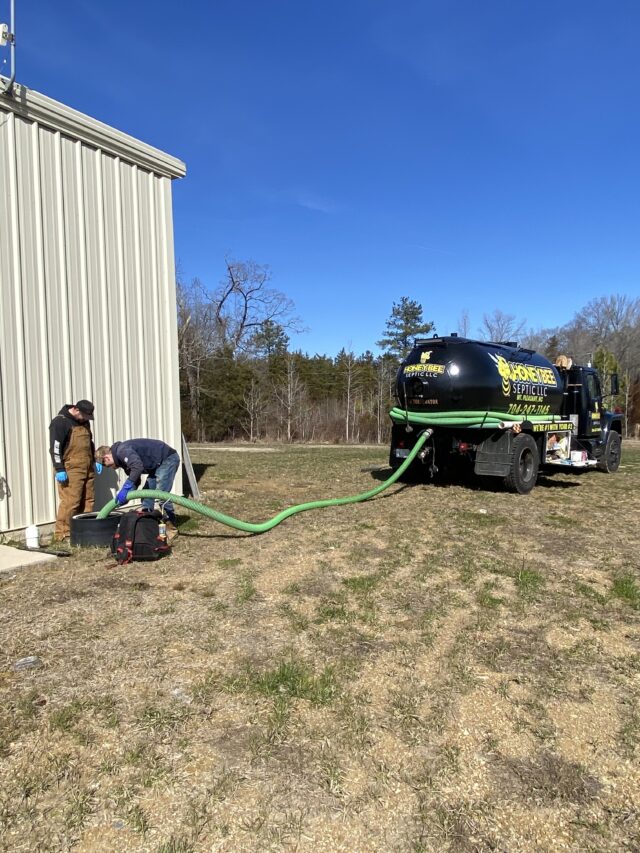
After a failed septic inspection, homebuyers should obtain the written report, identify the affected components, and request a professional evaluation before agreeing to repairs or proceeding with closing. A failed inspection does not always mean the entire septic system needs replacement. The next step depends on the severity of the problem, available documentation, and applicable requirements.
A failed septic inspection during a home purchase can create uncertainty, especially when closing dates are approaching. At HoneyBee Septic Tank Service, we help buyers throughout Charlotte, Concord, Mount Pleasant, and surrounding North Carolina communities understand septic problems and determine what needs further attention.
What Should Buyers Do After a Failed Septic Inspection?
The first step is to understand why the system failed the inspection rather than immediately requesting a complete replacement.
A septic inspection may identify relatively minor maintenance problems, damaged components, or serious issues affecting wastewater treatment and dispersal.
Each situation requires a different response.
Get the Complete Written Inspection Report
Ask the inspector for the full report, including photographs, observations, limitations, and recommended next steps.
Avoid relying solely on a verbal explanation or a brief statement that the system failed.
The report should help establish:
- Which septic components were inspected
- What defects or abnormal conditions were identified
- Whether the system showed signs of malfunction
- Which components could not be evaluated
- Whether further investigation is recommended
- Whether immediate repairs or additional assessments may be necessary
For example, a homebuyer in Concord might receive a report identifying a damaged tank outlet baffle.
That finding requires attention, but it does not automatically establish that the drainfield has failed.
A different report documenting wastewater surfacing over the drainfield may indicate a much more significant problem.
Determine Whether the Problem Is Confirmed or Suspected
Inspectors may identify conditions that suggest a problem without being able to determine the exact cause.
A high liquid level inside the septic tank, for example, may warrant further examination of the outlet, distribution components, or drainfield.
The buyer should ask whether the report identifies a confirmed defect, a suspected malfunction, or a limitation that prevented a complete evaluation.
That distinction helps determine whether additional testing, a repair assessment, or a more extensive site evaluation is necessary.
Notify Your Real Estate Agent Promptly
Share the findings with your agent before important contract deadlines pass.
The North Carolina Real Estate Commission explains that the due diligence process gives buyers an opportunity to investigate property conditions and consider potential repairs.
However, inspection findings do not automatically require the seller to pay for repairs.
Any requests, agreements, or closing decisions must be evaluated under the specific purchase contract.
What Does the Written Report Actually Identify?
A septic inspection report should help buyers distinguish maintenance concerns from defects affecting system operation.
Not every problem has the same consequences for the property.
Tank and Component Defects
Some findings involve accessible components that may be repaired or replaced without rebuilding the entire wastewater system.
Examples include:
- Damaged or missing tank lids
- Deteriorated inlet or outlet baffles
- Blocked or damaged effluent filters
- Cracked access risers
- Faulty pumps, floats, or alarms
- Damaged connections between components
The appropriate repair depends on the condition of the equipment and whether other problems are present.
For example, replacing a damaged baffle may address an identified component defect. However, the technician should also assess whether solids have escaped into downstream components.
Drainfield Performance Concerns
Drainfield-related findings require careful evaluation because the dispersal area performs the final stage of wastewater treatment.
Warning signs may include sewage odors, persistent wet areas, wastewater surfacing, or evidence of backup.
North Carolina’s wastewater rules, particularly 15A NCAC 18E .1303, describe conditions used to identify malfunctioning systems. These include certain sewage discharges, backups, and specified effluent levels near the ground surface.
A buyer’s inspection report is not necessarily the same as an official malfunction determination or notice of violation.
However, signs of sewage surfacing or backing up should be addressed promptly.
Missing Records or Unverified Capacity
An inspector may also find that the system’s approved design cannot be confirmed from available records.
This is different from discovering a physically damaged component.
Buyers should request the original septic permits, including the Operation Permit and available system drawings.
These documents may identify the approved wastewater capacity, system type, and drainfield location.
A property advertised as having four bedrooms should not automatically be assumed to have septic approval for four bedrooms.
If the records disagree with the home’s current configuration, ask the appropriate permitting authority to clarify the situation.
Which Findings Need Further Diagnosis?
Some inspection results provide enough information for a contractor to recommend a specific repair.
Others require additional investigation before the full scope of work can be established.
Recurring Backups and Slow Drainage
A slow drain does not always indicate septic system failure.
The cause could involve an obstruction in the building sewer line, an overloaded tank, a damaged outlet, or a problem farther downstream.
For example, a buyer considering an older home near Mount Pleasant might learn that the seller has experienced recurring wastewater backups.
Instead of assuming the property needs a new drainfield, a qualified professional should determine where the wastewater flow is being restricted.
The diagnosis may involve examining accessible piping, checking tank levels, reviewing maintenance history, or performing other appropriate tests.
Standing Water Around the Drainfield
Wet soil does not always mean septic effluent is surfacing.
Recent rainfall, yard drainage problems, and groundwater conditions can produce similar visible symptoms.
However, suspected wastewater surfacing should never be ignored.
A professional assessment should consider the location, weather conditions, system configuration, and available evidence.
If wastewater is discharging to the surface or sewage is backing up into the home, the owner should contact the appropriate local health department or authorized professional as required.
Should Buyers Request a Second Evaluation?
A second evaluation may be worthwhile when the original findings are unclear, the recommended work is extensive, or the report identifies problems outside the inspector’s completed assessment.
North Carolina requires appropriate certification for qualifying point-of-sale septic inspections.
The North Carolina Onsite Wastewater Contractor Inspector Certification Board maintains information about inspector certification.
When requesting another evaluation, confirm the professional’s qualifications and explain which findings need clarification.
The purpose should be to obtain a reliable diagnosis, not simply a more favorable report.
How Should Buyers Compare Repair Estimates?
After identifying the likely problem, request a written septic repair estimate from a qualified professional.
An accurate estimate should explain the proposed work and identify assumptions that could affect the final cost.
Comparing only the bottom-line prices may lead buyers to misunderstand what each contractor intends to repair.
What Should the Estimate Include?
A useful estimate should identify:
- The septic components requiring attention
- The proposed repairs or replacements
- Materials and equipment included
- Excavation and site restoration responsibilities
- Whether additional diagnosis is needed
- Applicable permitting and inspection requirements
- Expected project limitations or exclusions
- Conditions that could change the quoted price
For example, one estimate may cover replacing a damaged distribution component, while another includes excavating and evaluating surrounding piping.
Those proposals may address different amounts of work.
Ask contractors to explain the differences before comparing costs.
Understand the Possibility of Additional Work
Underground repairs sometimes reveal damage that was not visible during the initial inspection.
A damaged pipe may be accessible near the tank, but additional deterioration could become apparent after excavation.
The contractor should explain which conditions can be confirmed beforehand and how unforeseen work will be handled.
This is particularly important when a seller and buyer are discussing repair costs before closing.
An estimate based on incomplete information should not be treated as a guaranteed final price.
When Might Replacement Be Necessary?
Some problems cannot be resolved through routine maintenance or a limited component repair.
A severely deteriorated tank, unsuitable drainfield, or system with significant design limitations may require more extensive work.
The appropriate solution depends on the site’s soil conditions, available land, existing permits, and applicable North Carolina requirements.
A complete septic replacement should be considered only after the relevant conditions and available repair options have been properly evaluated.
How Can Repairs and Reinspection Be Documented?
When repairs are completed before a property changes ownership, buyers should request documentation showing what work was performed.
A verbal assurance that the septic system has been fixed may not be sufficient to establish that the original problems were addressed.
Keep a Clear Repair Record
Important records may include:
- The original inspection report
- A written repair proposal
- Contractor identification and certification information
- Applicable permits or authorizations
- Invoices describing completed work
- Before-and-after photographs
- Required approval or inspection documentation
- Follow-up inspection findings
These documents help establish the repair history and may be useful for future maintenance.
Understand Permitting Requirements
North Carolina’s on-site wastewater regulations address system malfunction and repair under 15A NCAC 18E.
Certain repairs require an application, authorization, and applicable inspection procedures.
Routine maintenance may be treated differently from work involving system alteration or reconstruction.
The appropriate process depends on the identified problem and the permit pathway.
Buyers should contact the responsible local health department or authorized wastewater professional when clarification is needed.
For properties in Charlotte, Mecklenburg County Public Health handles applicable septic permitting matters. Properties in Concord or Mount Pleasant generally fall under Cabarrus County’s environmental health jurisdiction.
Arrange Verification Before Closing When Appropriate
If a seller agrees to repair a septic problem, the buyer may want the completed work independently verified.
A follow-up assessment can help determine whether the specific defects identified in the original report have been addressed.
However, a reinspection does not guarantee that the system will never develop another problem.
It also does not replace any official approvals required for permitted repair work.
Buyers should retain the final documentation and provide relevant information to their agent, closing attorney, or lender when appropriate.
What Should Buyers Discuss With Their Agent Before Closing?
A failed septic inspection is both a property-condition concern and a home purchase decision.
Once the diagnosis and estimated repair scope are understood, the buyer can discuss available options with the real estate professionals involved.
Review the Due Diligence Deadline
North Carolina purchase contracts commonly include a negotiated due diligence period.
During that period, buyers may investigate property conditions and determine whether to proceed under the terms of their agreement.
A septic problem discovered shortly before the deadline can make the decision more complicated.
If further evaluation is needed, discuss whether the parties are willing to agree to an extension.
Do not assume that requesting additional septic work automatically extends the due diligence period.
Any extension should be properly documented.
Discuss Potential Repair Arrangements
Depending on the findings and the seller’s willingness, potential arrangements may include:
- Requesting that the seller complete specified repairs
- Discussing an adjustment to the purchase price
- Considering an agreed financial concession
- Negotiating additional time for evaluation
- Reconsidering the purchase if acceptable terms cannot be reached
These are possible negotiation topics, not guaranteed buyer rights.
Under North Carolina’s commonly used standard purchase contract, sellers generally are not obligated to make repairs unless they agree to do so.
Any negotiated repair agreement should describe the work and establish appropriate verification requirements.
Ask About Financing and Closing Requirements
A septic defect may raise additional questions for the lender, depending on the financing program and the property’s condition.
Some lenders may request documentation or require certain issues to be resolved before closing.
However, no single inspection result determines whether every lender will approve a transaction.
Buyers should contact their lender directly to understand any property-condition requirements.
Their closing attorney can also advise on contractual obligations and the consequences of proceeding with unresolved defects.
Consider the Long-Term Costs of Ownership
A septic system may continue requiring maintenance after a documented repair.
Before accepting the property, buyers should consider the system’s age, condition, previous service history, and potential future expenses.
A repaired component does not necessarily mean every other part of an older system has been renewed.
For buyers comparing properties around Charlotte, Concord, or Albemarle, understanding these responsibilities can help prevent unexpected expenses after moving in.
FAQs
Does a Failed Septic Inspection Mean the Whole System Needs Replacement?
No. A failed inspection may identify a damaged component, maintenance issue, or more serious system malfunction. The complete repair scope depends on the diagnosis. Some problems can be resolved through limited repairs, while others may require extensive work or replacement.
Should Buyers Request a Second Septic Evaluation?
A second evaluation can be useful when the original report contains unclear findings, the proposed repair is expensive, or major components could not be inspected. Choose an appropriately certified professional who can explain the conditions requiring further investigation.
What Should a Septic Repair Estimate Include?
A written estimate should describe the affected components, proposed work, materials, excavation needs, permitting considerations, exclusions, and factors that could change the final cost. Buyers should confirm whether the estimate addresses the entire documented problem or only part of it.
Can Septic Repairs Be Verified Before Closing?
Yes, completed repairs can be evaluated before closing when access and scheduling arrangements permit. Buyers should request contractor documentation, applicable approvals, and appropriate follow-up findings. The requirements depend on the work performed and the purchase agreement.
How Is a Septic Inspection Different From a General Home Inspection?
A general home inspection evaluates the visible condition of multiple building systems. A dedicated septic inspection focuses on the on-site wastewater system, including applicable tank components, flow conditions, and drainfield concerns. North Carolina requires appropriate certification for qualifying real estate septic inspections.
Get Help Understanding Your Septic Inspection Results
A failed septic inspection can complicate a home purchase, but it does not always mean the property is unsuitable or that the entire system needs replacement. The important step is identifying the problem and understanding what repairs may be necessary.
At HoneyBee Septic Tank Service, we provide septic inspections, repairs, and related services for homeowners and buyers throughout Mount Pleasant, Concord, Charlotte, Albemarle, and surrounding communities.
Whether you need clarification about an inspection finding or an evaluation of possible repairs, our team can help you understand the condition of the system and the next steps.
Call HoneyBee Septic Tank Service at (704) 247-1145 or contact us online to discuss your septic inspection results before making your next home purchase decision.