
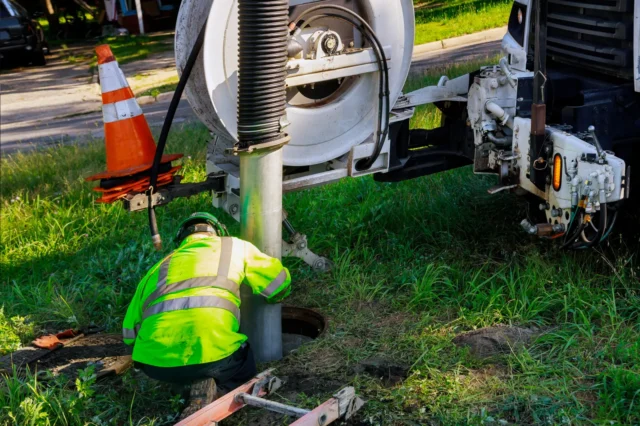
Septic tank expansion increases the capacity of the tank arrangement, while a septic system upgrade may involve changes to wastewater treatment, pumps, distribution components, or the drainfield. The right solution depends on the existing system’s approved design, property conditions, and wastewater needs. A professional evaluation should assess the complete system rather than tank size alone.
Septic Tank Expansion vs. System Upgrade: Which Does Your Home Need?
When an existing septic system no longer meets a property’s needs, homeowners may wonder whether installing a larger tank is enough or whether the entire system requires an upgrade.
Although these options sound similar, they address different parts of the wastewater treatment process.
A septic tank provides space for wastewater to separate into sludge, scum, and liquid effluent. The drainfield then receives that effluent and allows it to be treated through the soil.
Increasing tank capacity can provide additional space for wastewater separation and solids accumulation. However, it does not automatically increase the amount of wastewater the drainfield can handle.
A broader septic system upgrade may involve replacing outdated components, modifying wastewater distribution, improving treatment, or expanding the drainfield where site conditions and approved designs allow.
For homeowners in Mt. Pleasant, NC, understanding septic tank expansion vs system upgrade helps clarify which solution addresses the property’s actual needs.
At HoneyBee Septic Tank Service, we help homeowners evaluate existing systems and explore appropriate expansion, repair, and upgrade options.
The decision should begin with the current system’s condition, its approved wastewater capacity, and whether the property can support the proposed changes.
What Does Tank Expansion Actually Change?
Septic tank expansion focuses on increasing the liquid capacity available within the tank arrangement.
Depending on the existing design and applicable requirements, this may involve replacing a smaller tank with a larger approved unit or using an appropriately designed arrangement of multiple tanks.
However, adding tanks is not automatically permitted or suitable for every property.
How tank capacity affects wastewater separation
Inside a conventional septic tank, heavier solids settle at the bottom while grease and other floating materials collect near the surface.
Liquid wastewater remains between these layers before moving through the outlet toward the drainfield.
Tank capacity provides space for this separation process and for accumulated solids between pumping services.
When a tank is undersized for its approved design, the available volume may be insufficient to meet the applicable requirements.
Increasing tank capacity may address that specific limitation.
However, the replacement tank must still meet the appropriate design and installation standards.
Does a larger tank handle more wastewater?
A larger tank can hold more liquid, but that does not necessarily mean the septic system can process more wastewater each day.
The drainfield must still receive and disperse the outgoing effluent.
If the existing drainfield was designed for a lower wastewater flow, increasing the tank’s capacity does not automatically increase the drainfield’s approved capacity.
This distinction is especially important when evaluating proposals that promise additional septic capacity through tank replacement alone.
The contractor should explain whether the project increases tank volume, approved system design flow, or both.
When might tank expansion be appropriate?
Tank expansion may be considered when:
- The existing tank does not meet the capacity required for the approved system design.
- The tank is otherwise suitable for replacement or modification.
- The downstream components can accommodate the approved wastewater flow.
- The proposed tank arrangement meets applicable requirements.
- Site conditions allow an approved installation.
An assessment should confirm these conditions before recommending excavation or new equipment.
For homeowners exploring larger tank arrangements, HoneyBee offers septic tank expansion services for properties in Mt. Pleasant and surrounding communities.
Which Components Can a System Upgrade Involve?
A septic system upgrade can address more than the tank itself.
Depending on the property’s needs, it may involve changes to treatment, wastewater distribution, mechanical equipment, or the drainfield.
The scope depends on what the existing system can support and what the approved design requires.
Septic tank replacement or modification
An upgrade may include replacing a deteriorated tank or installing a different approved tank arrangement.
The new configuration must provide suitable wastewater separation and meet the applicable capacity requirements.
Tank replacement may also be necessary when existing materials are structurally unsound or cannot be repaired appropriately.
Pumps and dosing equipment
Some septic systems rely on pumps to move effluent to another treatment or dispersal component.
An upgrade may involve changes to pumping equipment, controls, alarms, or dosing arrangements.
These components can influence how wastewater is delivered through the system.
However, adding a pump does not automatically increase wastewater treatment capacity.
The entire design must remain appropriate for the approved flow and site conditions.
Drainfield modifications
When the existing drainfield cannot support the proposed wastewater flow, an upgrade may require additional or redesigned dispersal capacity.
The appropriate design depends on available land, soil characteristics, separation distances, and applicable regulations.
Some properties may support a conventional drainfield expansion.
Others may require a different approved dispersal arrangement.
A larger tank cannot compensate for a drainfield that lacks sufficient treatment or absorption capacity.
Additional wastewater treatment
Certain properties require treatment beyond what a conventional septic tank provides.
Depending on site conditions, an approved system may incorporate additional treatment equipment.
These systems can have different operating, inspection, and maintenance requirements.
A contractor or qualified designer should explain why additional treatment is proposed and whether it is necessary for the property.
HoneyBee’s septic system upgrade services cover improvements involving tanks, drainfields, and other system components.
The recommended scope should address the specific limitation identified during evaluation.
How Do Site Conditions and Approved Capacity Affect the Choice?
Tank size is only one part of septic system planning.
Before deciding whether expansion or a broader upgrade is appropriate, the existing permits, approved design flow, and property conditions must be reviewed.
What is septic system design flow?
Septic system design flow represents the wastewater quantity used to size and approve the system.
It is not necessarily the same as the household’s average daily water consumption.
The design establishes the capacity that the wastewater treatment and dispersal components must accommodate under applicable requirements.
In North Carolina, residential design flow is generally determined through state wastewater rules that account for dwelling characteristics and occupancy-related requirements.
The approved permit should be reviewed before assuming the property can support a higher wastewater flow.
A larger tank does not independently change that approval.
Why soil conditions matter
Drainfields depend on suitable soil to receive and treat wastewater.
During a site evaluation, relevant conditions may include:
- Soil texture and structure.
- Soil depth and restrictive layers.
- Seasonal wetness and groundwater conditions.
- Property slope and landscape position.
- Available space for wastewater dispersal.
- Required separation distances.
Two properties with similar homes may require different septic designs because their soil and site conditions differ.
A proposal should account for the actual property’s suitability rather than rely only on the size of the existing tank.
Can the existing drainfield limit expansion?
Yes. Even when there is room to install a larger septic tank, the existing drainfield may not be suitable for additional wastewater.
Its approved design may limit how much effluent the system can receive.
If more dispersal capacity is needed, the property must have suitable space and soil for an approved modification.
Where adequate land or soil conditions are unavailable, the options may be more limited.
What about available repair areas?
North Carolina wastewater planning also considers designated areas for system repair or replacement.
A proposed project should not compromise areas that must remain available for wastewater system use.
Buildings, driveways, landscaping changes, and other development can affect available space.
A professional evaluation should consider both the existing system and the remaining suitable area.
Are permits required?
North Carolina regulates onsite wastewater systems under 15A NCAC 18E.
Expansion, repair, and system modification projects may require approvals through the local health department or an applicable authorized permitting pathway.
The specific requirements depend on the project, existing permits, and system design.
Homeowners should confirm the required engineering, professional evaluations, and permits with the appropriate local authorities before work begins.
No additional tank or drainfield component should be installed based solely on an assumption that the property has enough space.
What Should You Compare in Competing Proposals?
When evaluating septic expansion and upgrade proposals, homeowners should compare the actual work included rather than focusing only on the recommended equipment.
Two proposals may describe different solutions because the contractors identified different system limitations.
1. Existing system findings
Each proposal should explain the current system’s condition.
This may include tank capacity, component deterioration, downstream performance, and available permit information.
If the problem has not been clearly identified, the homeowner should ask what evidence supports the proposed work.
2. Approved capacity and proposed changes
The proposal should distinguish between increasing tank volume and increasing the approved wastewater design flow.
These are separate considerations.
Homeowners should understand whether the existing drainfield remains part of the design or whether changes are necessary.
3. Components included in the project
A proposal should clearly identify which parts of the system will be modified.
For example, it should distinguish between:
- Replacing the existing septic tank.
- Installing an approved additional tank arrangement.
- Modifying outlet or distribution components.
- Installing or replacing pumping equipment.
- Expanding or redesigning the drainfield.
- Incorporating additional wastewater treatment.
Clear descriptions make it easier to understand how each proposed component addresses the identified problem.
4. Site evaluation and permitting
Ask whether the proposed work depends on further soil evaluation, design approval, or other regulatory requirements.
The proposal should explain which decisions remain subject to approval.
A preliminary recommendation should not be presented as an approved installation plan.
5. Construction and property disturbance
Projects can differ considerably in the areas of the property affected.
Replacing a tank may require a different excavation scope from installing a new drainfield.
The proposal should describe anticipated access requirements, affected areas, and how existing utilities or structures may influence the work.
6. Future maintenance requirements
Additional pumps, treatment equipment, and other components may introduce different inspection and servicing needs.
Homeowners should understand the maintenance obligations associated with each proposed system.
The appropriate choice is not necessarily the option involving the fewest components.
It is the solution that addresses the wastewater requirements while remaining suitable for the property and approved design.
When Does Repair or Replacement Enter the Discussion?
Not every septic concern requires an expansion or upgrade.
Sometimes the existing system has adequate approved capacity but is experiencing a specific mechanical or structural problem.
In these circumstances, repair may be more appropriate than increasing capacity.
When a localized repair may be sufficient
A professional may identify a damaged baffle, restricted outlet, leaking tank connection, or another component defect.
If the system remains suitable for its approved use, repairing the affected component may resolve the problem without increasing capacity.
The evaluation should confirm that other system components remain serviceable.
When a larger project may be necessary
More extensive work may be considered when the tank is structurally compromised, the drainfield is no longer functioning adequately, or the system cannot meet the property’s approved wastewater requirements.
A broader replacement may also become necessary when the existing configuration cannot be modified appropriately.
However, replacement should be based on actual findings and site suitability rather than system age alone.
Why recurring backups do not prove insufficient capacity
Sewage backups can result from blocked pipes, clogged filters, saturated soil, damaged components, or other problems.
These symptoms do not automatically mean the septic tank is too small.
Installing a larger tank without correcting the underlying problem may leave the original condition unresolved.
For homeowners in Mt. Pleasant, the appropriate next step is a professional assessment of the existing system and available project options.
The contractor should explain whether the property needs a repair, a tank capacity change, a wider upgrade, or a replacement based on the findings.
FAQs
Is a bigger septic tank always enough?
No. A larger tank increases available tank volume but does not automatically increase the drainfield’s wastewater treatment and dispersal capacity. The entire system must be evaluated against its approved design flow and site conditions.
How is tank expansion different from an upgrade?
Tank expansion focuses on increasing septic tank capacity. A system upgrade may involve tank replacement, pumping equipment, wastewater treatment, distribution components, or drainfield modifications. The appropriate scope depends on the existing system’s limitations.
Can existing drainfields limit added capacity?
Yes. An existing drainfield may be approved for a specific wastewater flow. If additional capacity is required, the property must have suitable soil and space for an approved system modification or another permitted solution.
What should an expansion proposal include?
A proposal should identify the existing system’s condition, proposed tank arrangement, design capacity, affected components, site requirements, permitting considerations, and anticipated construction scope. It should explain how the work addresses the identified need.
When might replacement be a better option?
Replacement may be appropriate when components are extensively deteriorated, the existing system cannot be repaired adequately, or the approved design cannot support the required wastewater flow. A professional evaluation should establish whether replacement is necessary.
Need a Septic Expansion or Upgrade? Contact HoneyBee Septic Tank Service
Choosing between tank expansion and a system upgrade starts with understanding what your existing septic system can support.
At HoneyBee Septic Tank Service, we help homeowners in Mt. Pleasant, NC, and surrounding communities evaluate septic system conditions and explore appropriate installation, expansion, and upgrade options.
Our team can discuss your property, identify the next evaluation steps, and help you understand the proposed work.
Call HoneyBee Septic Tank Service at (704) 247-1145 to discuss your septic expansion or system upgrade needs.