
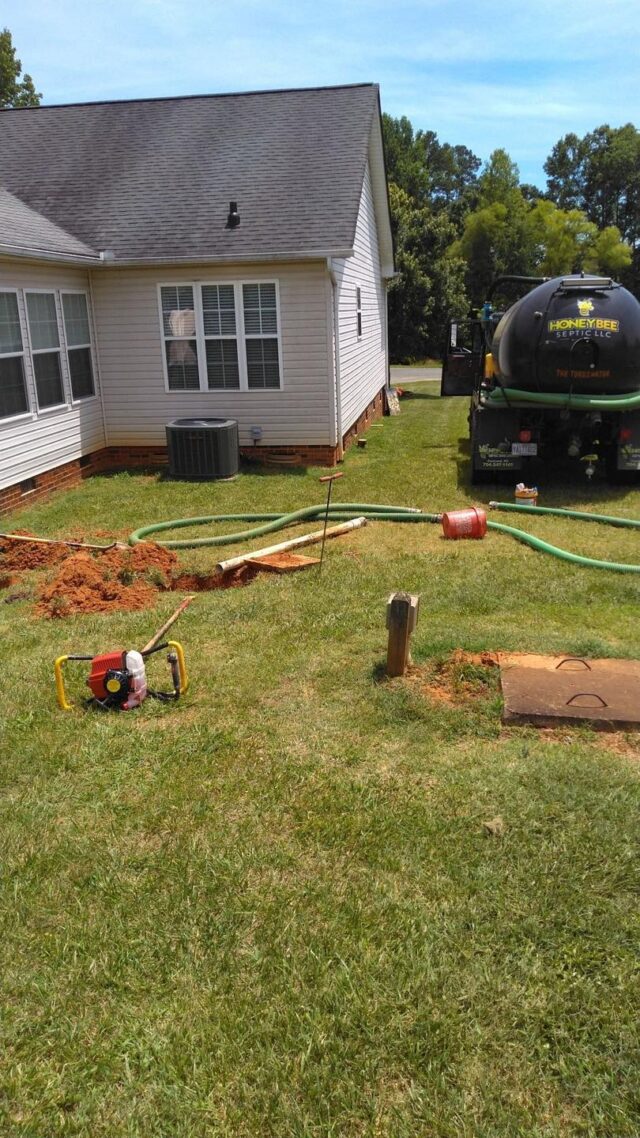
A septic tank normally returns to its operating liquid level as household wastewater enters after pumping. This does not mean it has filled with accumulated solids again. However, unusually rapid water entry, higher-than-normal liquid levels, or recurring sewage backups may indicate groundwater intrusion, restricted drainage, or another problem requiring professional evaluation.
Why Does a Septic Tank Fill With Water Soon After Pumping?
Homeowners sometimes become concerned when their septic tank appears full of water shortly after being pumped.
After paying for septic service, finding liquid inside the tank again can make it seem as though the pumping did not work.
However, septic tanks are designed to contain wastewater during normal operation.
Unlike a storage container that should remain empty until its next scheduled service, a conventional septic tank maintains a working liquid level while wastewater moves through the system.
When someone flushes a toilet, washes dishes, or uses a shower, wastewater enters the tank. As the liquid level reaches the outlet, a corresponding amount of treated wastewater, called effluent, flows toward the drain field.
The purpose of pumping is primarily to remove accumulated sludge and scum, not to keep the tank empty.
That distinction matters when determining whether the septic tank fills with water after pumping because of normal household use or an underlying system problem.
At HoneyBee Septic Tank Service, we help homeowners in Mt. Pleasant, NC, understand septic system conditions and determine when further inspection or maintenance may be necessary.
The important question is not simply how quickly water returns. It is whether the liquid is entering from the expected source and leaving the tank properly.
What Is a Normal Operating Liquid Level?
A conventional septic tank is designed to maintain a specific liquid level established by its outlet configuration.
Under normal conditions, the liquid surface typically rests near the bottom of the outlet pipe, often referred to as the outlet invert.
This operating level allows wastewater to remain inside the tank long enough for solids and floating materials to separate.
What happens immediately after pumping?
During professional septic pumping, accumulated wastewater, sludge, and floating scum are removed.
Once the tank has been pumped, wastewater from the home begins entering again as plumbing fixtures are used.
The liquid level gradually rises toward its normal operating position.
When that level is reached, additional incoming wastewater displaces a corresponding volume of effluent through the outlet.
This is normal septic tank operation.
Some systems may also be refilled with clean water as part of a professional service procedure when appropriate for their design and site conditions.
Why does the tank look full again?
Much of the tank’s interior is normally occupied by liquid.
Therefore, seeing water near the outlet level does not indicate that the tank needs another pumping.
The tank should contain sufficient liquid to support separation and normal wastewater movement.
A professional distinguishes normal operation from an abnormal condition by checking the liquid level in relation to the outlet and considering whether wastewater can flow downstream.
How long should refilling take?
There is no universal number of hours or days that every septic tank should take to return to its operating level.
Refilling depends on several factors:
- Household water consumption.
- Number of people using the plumbing.
- Tank capacity and configuration.
- Whether clean water was added after pumping.
- The condition of the inlet and outlet connections.
- Whether water is entering from unintended sources.
A household with heavy water use may restore the normal liquid level sooner than a property with limited occupancy.
The refill time alone does not establish whether the septic system is functioning properly.
How Do Liquid Levels Differ From Sludge and Scum Levels?
Understanding the difference between wastewater and accumulated solids helps explain why a recently pumped tank can contain substantial liquid without needing another service.
A conventional septic tank separates wastewater into three general layers.
Sludge at the bottom
Sludge consists of heavier solids that settle at the bottom of the tank.
These materials include waste particles and other substances that do not remain suspended in the liquid.
Bacteria break down some organic material, but not all accumulated solids disappear.
Over time, sludge gradually occupies more space within the tank.
Scum at the surface
Scum consists primarily of fats, oils, grease, and other floating materials.
This layer develops near the liquid surface.
Properly functioning inlet and outlet components help retain these materials inside the tank rather than allowing them to travel into the drain field.
Liquid between the layers
The middle portion contains liquid wastewater, commonly called effluent.
This liquid moves toward the outlet as additional wastewater enters.
After pumping, the sludge and scum layers should have been substantially reduced because those accumulated materials were removed.
The returning liquid does not mean those solids have immediately accumulated again.
Why solids determine pumping needs
Pumping schedules are based partly on the amount of sludge and scum accumulating inside the tank.
As these layers become thicker, they reduce the space available for proper separation.
Eventually, solids may approach the outlet and increase the risk of entering downstream components.
A septic professional can measure these layers to determine when pumping is necessary.
For additional information about warning signs involving excessive buildup or drainage restrictions, read our article on signs that it is time for professional septic tank pumping.
A normal liquid level and excessive solids accumulation are different conditions requiring different assessments.
Which Refill Patterns Need Investigation?
Although normal wastewater entry causes the tank to refill, certain patterns may suggest water is entering from an unintended source or cannot leave the system properly.
The timing and surrounding conditions can help a septic professional identify what needs further investigation.
Water entering rapidly despite limited household use
If a recently pumped tank gains substantial water while household plumbing use is minimal, the source may not be ordinary wastewater.
Potential explanations include groundwater entering through damaged tank components or water returning from downstream piping.
The contractor should evaluate the system’s construction and the conditions observed during pumping.
Groundwater entering the tank
Septic tanks are intended to be watertight.
However, cracks, damaged pipe connections, deteriorated seals, or defective risers may allow groundwater to enter.
This is called groundwater infiltration.
During periods of high groundwater, water pressure outside the tank can force moisture through vulnerable openings.
Possible entry locations include:
- Cracks in tank walls or joints.
- Damaged inlet and outlet pipe connections.
- Deteriorated access riser seals.
- Compromised tank lids or connections.
Water entering through these openings increases the hydraulic load on the septic system.
Even when the household uses very little water, infiltration may cause the liquid level to rise unexpectedly.
Water returning from the drain field
Another concern is septic tank water backflow from downstream components.
Normally, wastewater moves from the tank outlet toward the drain field.
However, restricted downstream drainage or saturated soil can cause water to accumulate in the outlet piping.
When the tank is pumped down, water held in the downstream system may flow backward into the tank.
This can indicate a hydraulic restriction rather than normal household refilling.
A contractor may observe the direction and amount of water movement during the pumping process.
Significant backflow deserves further investigation.
Unusually high liquid levels
The normal liquid level is generally controlled by the tank outlet.
If the liquid rises substantially above that position, wastewater may not be leaving the tank as intended.
Possible explanations include a blocked outlet, restricted effluent filter, downstream pipe obstruction, or saturated drain field.
A high liquid level should not automatically be attributed to excessive sludge.
The contractor must determine whether the problem involves accumulated solids, wastewater movement, or both.
Refill patterns following heavy rain
Rainfall can affect a septic system in several ways.
Groundwater may rise around the tank, increasing the potential for infiltration through defective connections.
The drain field may also become saturated, reducing its ability to accept additional effluent.
If problems develop mainly after prolonged rain, the contractor should consider these conditions.
However, weather-related symptoms do not establish the exact defect without further inspection.
Why Might Pumping Fail to Resolve a Backup?
Pumping removes accumulated waste from the septic tank, but it does not automatically repair damaged components or restore restricted drainage.
This explains why a household may experience temporary improvement after pumping, only for the same problem to return.
A downstream restriction remains
If wastewater cannot move through the outlet line or drain field, emptying the tank temporarily creates additional space.
As household wastewater returns, that space gradually disappears.
Once the liquid level becomes excessive again, slow drains or sewage backups may recur.
The original restriction remains unresolved.
The drain field cannot accept wastewater
The drain field relies on suitable soil conditions to receive and treat effluent.
When the soil becomes saturated or the system is otherwise overloaded, wastewater may not disperse adequately.
Removing liquid from the tank does not restore the soil’s ability to accept wastewater.
Further evaluation may be needed to determine whether the condition is temporary or indicates a more persistent drainage problem.
An inlet or outlet component is obstructed
Some systems contain effluent filters and other components that can become restricted.
A clogged outlet filter may prevent wastewater from leaving the tank properly.
Similarly, an obstruction in the household sewer line may prevent wastewater from entering the tank normally.
These problems require different corrective actions.
Pumping alone may not resolve either condition.
Pumping provides only temporary relief
A recently pumped tank may accept household wastewater for a period even when a downstream problem remains.
As the liquid rises, the original symptoms may return.
This does not necessarily mean the pumping was performed incorrectly.
Instead, it may indicate that the service addressed accumulated waste without correcting a separate hydraulic problem.
A professional assessment can determine whether additional work is necessary.
If sewage is backing up indoors or surfacing outdoors, reduce wastewater use and contact a septic professional promptly. Avoid contact with contaminated water, and never open or enter the septic tank yourself.
During flooding or saturated groundwater conditions, another pump-out should not be assumed safe or appropriate without professional evaluation.
What Should You Tell the Contractor About the Timing?
When contacting a septic company after a recent pump-out, specific information about the timing and symptoms can help direct the assessment.
Rather than reporting only that the tank is full again, explain what changed and when it happened.
Explain when pumping occurred
Provide the date of the most recent service and any available pumping records.
If the contractor documented unusual water levels, backflow, damaged components, or other concerns, mention those observations.
These details can help distinguish an existing condition from a newly reported symptom.
Describe when the problem returned
Explain whether the concern appeared shortly after pumping, following heavy household water use, or after significant rainfall.
The timing may help identify whether the tank is returning to its normal operating level or experiencing unexpected inflow.
Report the symptoms you noticed
Useful information includes:
- Toilets or drains backing up again.
- Water draining slowly throughout the home.
- Gurgling plumbing fixtures.
- Sewage odors near the system.
- Wet or unusually soft ground around the drain field.
- Septic alarms activating, if the system has them.
- Changes following rainfall or periods of heavy water use.
These observations do not prove the cause, but they help establish what should be examined.
Ask what was observed during pumping
The contractor may have recorded the liquid level before pumping and whether water returned through the outlet during service.
Those findings can provide important information about downstream conditions.
Homeowners can also ask whether the previous service identified damage to the tank, filters, baffles, or connections.
What should the next inspection establish?
A follow-up evaluation should determine whether the liquid level is normal and whether wastewater is entering and leaving the tank correctly.
Depending on the findings, the contractor may recommend examining inlet and outlet components, infiltration points, downstream drainage, or other relevant system conditions.
At HoneyBee Septic Tank Service, we provide septic system maintenance and inspections for homeowners dealing with unusual system behavior.
The goal is to identify the underlying condition before recommending another pumping or additional repairs.
FAQs
Is water in a septic tank normal after pumping?
Yes. A conventional septic tank normally contains liquid near its outlet level. Household wastewater gradually restores that level after pumping. Water returning does not automatically mean the tank needs to be emptied again.
How is normal liquid level different from excess sludge?
Normal liquid level refers to the wastewater held inside the tank during operation. Excess sludge consists of accumulated solids that reduce the space available for separation. A professional measures sludge and scum levels to determine pumping needs.
Can groundwater enter a septic tank?
Yes. Groundwater can enter through cracks, damaged seals, deteriorated pipe connections, or other defects. This infiltration may increase the tank’s liquid level even when household wastewater use is limited.
What does backflow during pumping suggest?
Water returning through the outlet during pumping may indicate that downstream piping or the drain field is holding excess water. Significant backflow can suggest saturated soil, restricted drainage, or another condition requiring professional investigation.
When should you call again after a pump-out?
Contact a septic professional if sewage backups continue, liquid levels become unusually high, water enters unexpectedly, or symptoms return soon after service. Explain when pumping occurred and what changed afterward.
Concerned About Your Septic Tank Refilling? Contact HoneyBee Septic Tank Service
A septic tank returning to its normal liquid level is expected, but recurring backups or unusual water movement should not be ignored.
At HoneyBee Septic Tank Service, we help homeowners in Mt. Pleasant, NC, and surrounding communities evaluate septic system concerns and understand their maintenance needs.
If your tank appears to refill unexpectedly after pumping, our team can discuss the symptoms and determine the appropriate next steps.
Call HoneyBee Septic Tank Service at (704) 247-1145 to discuss your septic concerns and schedule a professional evaluation.