
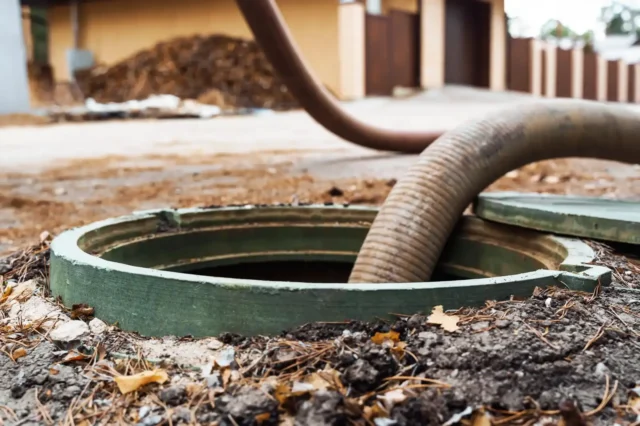
A parked RV still needs its black tank emptied when its toilet is being used and there is no suitable ongoing wastewater disposal connection. Stationary RV black tank pumping frequency depends on tank capacity, occupancy, water use, and actual waste levels. On-site pumping may be an option when the RV cannot easily be moved.
Keeping an RV in one location does not eliminate wastewater maintenance. Whether the camper sits on private property or at a campground in Mount Pleasant, NC, owners must understand how their holding tanks operate, when they need emptying, and which disposal arrangements are available.
Does an RV Black Tank Need Pumping When the RV Stays Parked?
Yes. A stationary RV still requires black tank maintenance whenever its toilet is used and wastewater accumulates in the holding tank.
The black tank collects toilet wastewater, including human waste, toilet paper, and flushing water. Unlike a household septic system, an RV holding tank is designed primarily for temporary storage.
The contents must eventually be discharged into an approved wastewater disposal system.
If the RV is connected to an appropriate sewer hookup, the tank can generally be emptied through that connection according to the manufacturer’s instructions.
If no connection is available, the owner must arrange another approved disposal method.
Why Parking an RV Does Not Change Its Tank Capacity
A black tank has a fixed storage capacity regardless of whether the RV travels frequently or remains parked for months.
Every toilet flush adds liquid and waste to the tank.
As the tank fills, its remaining storage capacity decreases.
A stationary camper used as temporary housing, guest accommodations, or an extended-stay residence may require regular wastewater removal.
However, an RV that remains parked but is not being used may accumulate little or no additional wastewater.
The need for pumping depends on actual use rather than how long the vehicle has been stationary.
When Professional Pumping Makes Sense
An RV septic tank pumping service may be useful when the vehicle has no approved sewer connection and cannot conveniently travel to a dump station.
For example, an RV parked on private property in Mount Pleasant may have limited access for moving the trailer or motorhome.
A mobile pumping company may be able to remove wastewater without requiring the owner to relocate the vehicle.
At HoneyBee Septic Tank Service, we provide RV septic pumping services for RVs and campers in Mount Pleasant, Charlotte, and surrounding confirmed service areas.
Before scheduling, we recommend confirming the RV’s tank configuration, available access, and current wastewater levels.
How Does a Holding Tank Differ From a Household Septic System?
An RV black tank and a household septic tank both contain wastewater, but they serve different purposes.
Confusing these systems can lead to inappropriate maintenance expectations.
RV Black Tanks Store Wastewater
An RV black tank holds toilet wastewater until it can be removed.
It does not have the soil absorption field or treatment arrangement associated with a conventional residential septic system.
Although some biological activity may occur inside the tank, owners should not rely on the black tank to treat or dispose of wastewater.
Its primary purpose is containment.
Once the contents approach the appropriate dumping level, they must be discharged through an approved connection or removed by a suitable pumping service.
Household Septic Systems Treat and Disperse Wastewater
A conventional household septic system includes a septic tank and a drainfield.
Wastewater enters the tank, where solids settle and lighter materials accumulate near the surface.
Liquid effluent then moves toward the drainfield for further treatment and dispersal through suitable soil.
A residential septic tank usually requires periodic pumping based on accumulated solids and system conditions.
An RV holding tank requires much more frequent emptying when actively used because it stores wastewater without a comparable continuous treatment and disposal process.
Campground Infrastructure Is a Separate System
Some campgrounds provide individual sewer connections linked to an approved wastewater system.
Others offer centralized dump stations or rely on separate collection arrangements.
These facilities are not part of the RV’s onboard black tank.
The availability of campground wastewater infrastructure does not automatically mean every parked RV has a usable sewer hookup.
Owners should verify the specific disposal arrangement before assuming that ongoing pumping is unnecessary.
The Environmental Protection Agency also cautions that certain RV holding-tank chemicals can interfere with onsite wastewater treatment systems.
Only appropriate waste products and approved disposal methods should be used.
What Determines Pump-Out Timing for a Parked RV?
There is no universal weekly or monthly pumping schedule suitable for every stationary RV.
The appropriate interval depends on how much wastewater enters the tank and how much usable capacity remains.
RV Black Tank Capacity
Different RV models have different holding tank capacities.
A smaller travel trailer may have less wastewater storage than a larger motorhome, although actual capacity varies considerably by model.
The correct specification should come from the RV manufacturer’s documentation.
Some vehicles have multiple holding tanks, separate discharge arrangements, or specialized sanitation systems.
Owners should identify the exact tank receiving toilet wastewater rather than assuming every RV uses the same configuration.
Number of Occupants
A parked RV occupied by one person will generally accumulate toilet wastewater differently from an RV accommodating several people.
More occupants typically mean more toilet use and faster tank filling.
However, occupancy alone cannot establish an accurate pumping interval.
Water use and the tank’s capacity must also be considered.
A campground guest using shared restroom facilities may produce less black tank wastewater than someone relying entirely on the RV’s toilet.
Water Used During Flushing
Toilet flushing adds water to the black tank.
The amount varies according to the toilet design and how it is operated.
Although conserving water may reduce the rate at which the tank fills, adequate water is important for moving waste and preventing solids from accumulating.
Owners should follow their RV manufacturer’s instructions rather than minimizing flushing water without considering sanitation-system requirements.
Tank Level Indicators
Many RVs have monitoring panels that display approximate black tank levels.
These indicators can help owners plan when the tank should be emptied.
However, readings may become inaccurate when waste residue or toilet paper affects the sensors.
Winnebago’s owner documentation acknowledges that debris on internal probes can cause false tank-level readings.
If the monitor repeatedly shows full after emptying, the issue may involve the sensors rather than the actual wastewater volume.
The appropriate response is to verify the condition of the system instead of assuming the tank is empty or overflowing.
Why Actual Usage Matters More Than Calendar Dates
A parked RV used every day may require frequent service.
Another RV occupied only occasionally may need emptying much less often.
Rather than booking pumping according to a universal schedule, owners should consider:
- Confirmed black tank capacity
- Number of regular occupants
- Approximate toilet usage
- Tank monitor readings and their reliability
- Previous emptying dates
- Manufacturer-recommended dumping procedures
These details provide a more useful basis for scheduling professional service.
How Do Hookups Change the Service Decision?
The available wastewater connection largely determines whether a parked RV needs a mobile pumping service.
An approved sewer hookup may allow routine tank emptying without bringing a vacuum truck to the property.
However, having a sewer connection does not eliminate black tank maintenance.
RVs With Full Sewer Hookups
When an RV is connected to an approved sewer inlet, wastewater can be discharged through the vehicle’s designated outlet.
Even with a continuous physical connection, the black tank generally should not remain open for constant drainage.
Thetford, a manufacturer of RV sanitation equipment, advises keeping the black tank dump valve closed during normal use, even when connected to campground sewer facilities.
Leaving the valve open may allow liquids to drain while solids accumulate inside the holding tank.
This buildup can eventually obstruct the system.
Instead, the tank is typically allowed to collect enough liquid for effective discharge, then emptied according to the manufacturer’s instructions.
RVs Without Sewer Connections
If no suitable sewer hookup exists, wastewater must be removed through another approved method.
Possible arrangements include using a designated RV dump station or scheduling an on-site pumping provider.
The correct option depends on the property’s access, the RV’s mobility, and locally permitted disposal arrangements.
An owner should not assume that a nearby household septic tank can accept RV wastewater without an evaluation of the connection and system suitability.
What About Gray Water Tanks?
Many RVs have a separate gray water tank that collects wastewater from sinks and showers.
Gray water is different from black water, but it still requires appropriate disposal.
Some mobile RV pumping services can empty both tanks.
However, tank configuration, fittings, and service availability must be confirmed.
A sewer hookup also does not remove the need to inspect valves, connections, and holding tank components.
What Does an On-Site Pump-Out Require?
An on-site RV pump-out generally involves a service provider arriving with equipment suitable for collecting and transporting holding-tank wastewater.
The RV may remain in its parked position when the equipment can safely access the designated discharge connection.
However, not every RV or parking arrangement is compatible with every pumping setup.
Access to the Wastewater Outlet
The pumping company must identify the RV’s wastewater discharge point.
On many recreational vehicles, black and gray tank outlets connect to designated dump valves and sewer fittings.
Other designs may use macerator systems, cassette toilets, or specialized plumbing arrangements.
These systems can require different connections and handling procedures.
Before visiting, the provider should confirm whether its equipment is compatible with the actual setup.
Access for the Pumping Vehicle
The pumping vehicle must be able to reach an appropriate service position.
Potential restrictions include narrow driveways, locked gates, soft ground, parked vehicles, and limited maneuvering space.
For example, a stationary camper on a residential property near Mount Pleasant may have an accessible wastewater outlet but limited room for a service truck.
The provider should evaluate the available access and equipment requirements before confirming the appointment.
Do not assume that a pumping hose can reach every RV from the street.
Safe Wastewater Handling
Black tank wastewater contains sewage and requires sanitary handling and approved disposal.
The service provider should confirm the appropriate collection arrangement and destination for the waste.
The EPA advises RV owners and operators to avoid improper disposal practices that could contaminate soil and water resources.
Owners should also disclose any holding-tank treatment products used, particularly when the receiving wastewater facility may have restrictions.
When the Tank Has a Problem
A black tank that will not drain may have a blocked outlet, malfunctioning valve, accumulated solids, or another plumbing problem.
Pumping alone may not resolve every obstruction.
Likewise, an unexplained odor does not always mean the tank is full.
A damaged seal, vent problem, or plumbing defect may require a separate inspection.
If wastewater is backing up or escaping from the RV, stop using the affected plumbing fixtures and contact a suitable service professional.
What Should You Tell the Pumping Company?
Providing accurate information before booking helps the pumping company determine whether the RV can be serviced safely in its current location.
A service request should identify the vehicle, tank configuration, and any conditions that may affect access.
RV and Holding Tank Information
Have the following details available:
- RV type: Travel trailer, fifth wheel, motorhome, or another configuration.
- Make and model: Including the model year when known.
- Tank capacity: The manufacturer’s listed black tank capacity.
- Current level: The latest available reading and any concerns about accuracy.
- Number of tanks: Whether black and gray water service is needed.
- Discharge configuration: Standard outlet, macerator, cassette, or another system.
- Last pump-out: The approximate date the tank was last emptied.
If the RV has an unusual waste connection, ask whether photographs would help the provider confirm compatibility.
Property and Parking Details
Explain where the RV is parked and whether the site has a sewer hookup.
Mention gates, narrow approaches, unpaved access, and obstacles that could affect the service vehicle.
If the RV is located at a campground, confirm whether management permits outside pumping services to enter the property.
The provider may also need to know the distance between the nearest vehicle access point and the RV’s wastewater outlet.
Clarify the Proposed Service
Before booking, ask whether the quoted work includes black tank pumping only or both black and gray tanks.
Also confirm any flushing procedures, access requirements, and applicable additional charges.
A mobile RV pumping service is not automatically the same as a full sanitation-system cleaning or repair.
Understanding the scope helps avoid assuming that every tank-related concern will be addressed during the visit.
At HoneyBee Septic Tank Service, we provide mobile RV septic pumping for parked campers and recreational vehicles within our confirmed service area.
We encourage RV owners to share their vehicle details and access conditions so we can determine whether the requested service is appropriate.
FAQs
How Often Does a Stationary RV Need a Pump-Out?
There is no fixed schedule for every parked RV. Pump-out timing depends on black tank capacity, occupancy, water use, and actual tank levels. A frequently occupied camper without a sewer connection may need service much sooner than an RV used occasionally. Follow the manufacturer’s dumping instructions.
Can an RV Tank Be Pumped While Parked?
Yes. Mobile RV pumping services may be able to empty compatible holding tanks without moving the vehicle. However, the provider must confirm access to the discharge connection, equipment compatibility, and safe positioning of the pumping vehicle.
Is an RV Black Tank the Same as a Septic Tank?
No. An RV black tank primarily stores toilet wastewater until disposal. A household septic system separates wastewater components and directs effluent into an approved treatment and absorption system. Their capacities, operating methods, and maintenance requirements differ.
Does a Sewer Hookup Remove All Tank Maintenance Needs?
No. An approved hookup provides a way to discharge wastewater, but the black tank still requires proper valve operation, periodic emptying, and maintenance. Manufacturers generally advise keeping the black tank valve closed during normal use until it is time to dump.
What Information Should You Provide When Booking?
Provide the RV make and model, tank capacity, current wastewater level, discharge connection type, parking location, and available vehicle access. Tell the provider whether gray tank pumping is also needed and whether the campground or property owner has any service restrictions.
Can an RV Sit Parked Without Black Tank Pumping?
Yes, if the tank is not accumulating wastewater and its condition is maintained according to the manufacturer’s instructions. However, waste should not simply be left indefinitely without considering storage, sanitation, and winterization requirements. An RV that is actively occupied still needs an approved wastewater disposal arrangement.
Schedule RV Black Tank Pumping With HoneyBee
A stationary RV still needs proper wastewater management, even when it remains in the same location for extended periods.
At HoneyBee Septic Tank Service, we provide on-site RV pumping services for compatible campers and recreational vehicles in Mount Pleasant, NC, and surrounding communities within our service area.
We can discuss your black tank capacity, wastewater levels, and parking arrangement to help determine whether mobile pumping is appropriate.
Call HoneyBee Septic Tank Service at (704) 247-1145 to discuss stationary RV black tank pumping and confirm service availability for your location.